How to Lease Commercial Space in Sioux Falls: A Step-by-Step Guide for Business Owners
A practical, step-by-step guide to help you lease commercial space in Sioux Falls, from budgeting and touring to negotiating the lease itself.
If you have never done it before, deciding to lease commercial space in Sioux Falls can feel more complicated than it needs to be. Between defining what you actually need, understanding how landlords structure rent, and figuring out which lease clauses actually matter, business owners often either overpay or sign terms that hurt them two years down the road. This guide walks through the process step by step, the way I walk clients through it in real meetings, so you go into your first tour already speaking the same language as the landlord's broker.
I have represented tenants ranging from a two-person accounting firm looking for 900 square feet downtown to a regional distributor needing 60,000 square feet of industrial space near the I-29 corridor, and the fundamentals are the same at every size. Define the requirement precisely, understand the true cost of occupancy, protect yourself in the lease document, and do not sign anything until someone whose only job is representing you has reviewed it. Let's go through each step.
Step 1: Define Your Space Requirement Before You Look at Listings
The single biggest mistake we see when a business owner tries to lease commercial space in Sioux Falls on their own is starting with listings instead of starting with a program. Before you tour a single space, write down your headcount today, your projected headcount in three years, and what kind of layout your business actually needs: private offices, open desks, a showroom, a warehouse with dock access, or some combination.
Square Feet Per Employee and Load Factor
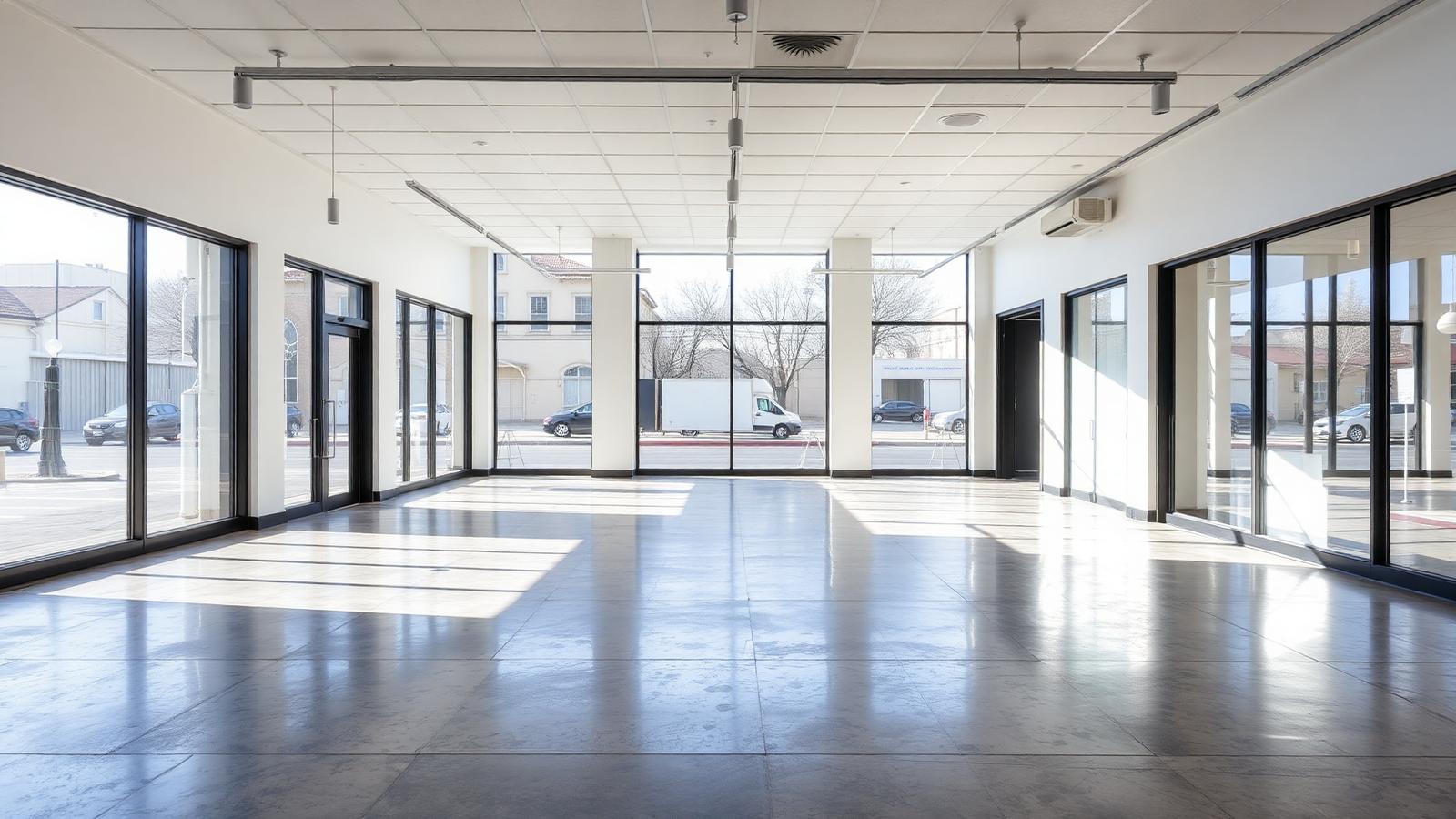
As a general planning benchmark, allow 150 to 250 usable square feet per employee for a typical office layout, tighter for open-plan call centers, and looser for executive or professional service layouts with private offices and conference rooms. Then account for load factor, the difference between usable square feet and rentable square feet, which covers your share of common areas like lobbies, restrooms, and hallways. Load factors in Sioux Falls office buildings typically run 10 to 18 percent, meaning a 2,000 usable square foot suite might actually be billed as 2,200 to 2,360 rentable square feet.
Retail and Industrial Space Planning
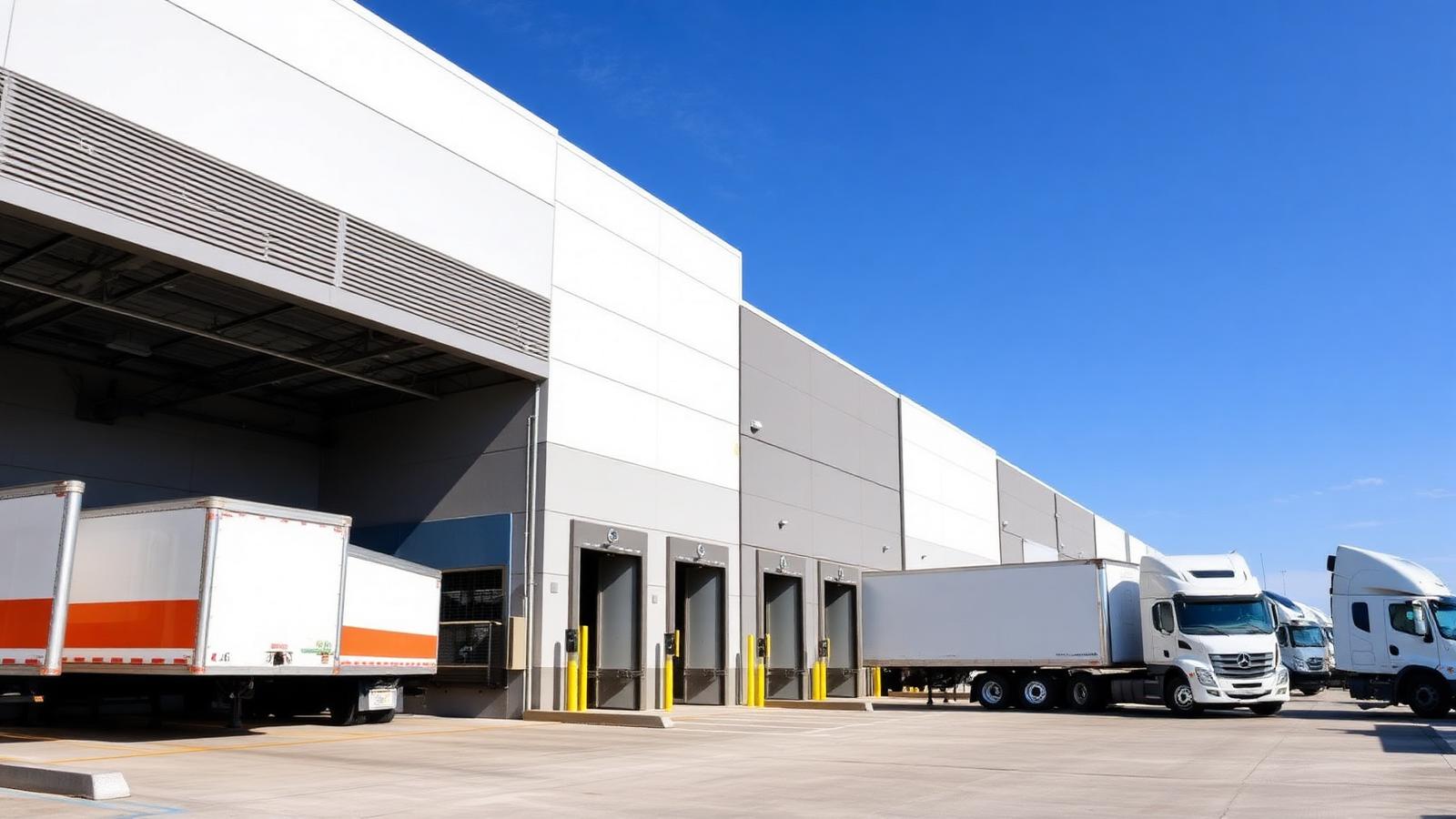
Retail tenants should plan backward from fixture layout and required parking ratio, which most Sioux Falls municipalities set around 4 to 5 spaces per 1,000 square feet for general retail and higher for restaurant uses. Industrial tenants should plan around clear height, dock door count, drive-in door access, and column spacing before square footage, because a building with the wrong clear height or door configuration is unusable no matter how affordable the rent looks.
Step 2: Understand How Rent Is Actually Structured
One of the most common points of confusion when a tenant tries to lease commercial space in Sioux Falls is the difference between the rent structures landlords quote. Getting this wrong when comparing two listings can make an expensive space look cheap and a cheap space look expensive.
- Gross lease: one number covers rent plus most operating expenses, common in smaller downtown office suites
- Modified gross: base rent plus some expenses (often utilities or janitorial) paid by the tenant separately
- Triple net (NNN): tenant pays base rent plus their pro-rata share of taxes, insurance, and common area maintenance (CAM)
- Full service: similar to gross, common in larger Class A office buildings, typically includes a base year expense stop
- Percentage rent: retail structure where tenant pays a base rent plus a percentage of sales above a breakpoint, mostly seen in larger retail centers
Always ask for the all-in occupancy cost, meaning base rent plus estimated CAM, taxes, and insurance, expressed as a single number per square foot per year. A 12 dollar NNN space with 5 dollars of CAM is more expensive than a 16 dollar full-service space, and you cannot see that by comparing base rents alone.
Step 3: Budget for Tenant Improvements and CAM Increases
Most landlords in Sioux Falls will offer a tenant improvement (TI) allowance for new leases on space that needs work, typically ranging from 10 to 25 dollars per square foot for office space depending on term length and tenant credit, and less for industrial or vanilla-shell retail space. If your build-out costs more than the allowance, you either pay the difference out of pocket, amortize it into your rent over the lease term, or negotiate a longer term in exchange for a larger allowance.
CAM charges also deserve real scrutiny, because they typically increase 3 to 6 percent per year and are often estimated at the start of the year with a reconciliation true-up at year end. Ask for a CAM cap, which limits how much controllable expenses can increase annually, and ask to see the last two years of actual CAM statements for the building before you sign, not just the landlord's projection.
Step 4: Know Your Timeline by Deal Size
How long it takes to go from search to move-in depends heavily on the size and complexity of the deal. Planning around realistic timelines prevents the common mistake of signing a rushed lease because a move-out deadline is approaching.
Step 5: Tour Smart
When you tour space to lease commercial space in Sioux Falls, bring the same checklist to every property so you can compare apples to apples afterward. Note parking count and visibility from the street, HVAC condition and age, ceiling height and column spacing for any warehouse component, loading and drive-in door access, ADA compliance of restrooms and entrances, and whether the electrical and data infrastructure can support your equipment.

Ask every landlord the same set of questions on every tour: what is the actual asking rent structure, what is the estimated CAM per square foot, what TI allowance is available, what is the current occupancy of the building, and who are the neighboring tenants. Consistency in your questions is what lets you make a real comparison instead of an emotional decision based on which suite had the nicest paint.
Step 6: Submit a Letter of Intent (LOI)
Once you have narrowed your options, your broker submits a letter of intent, a non-binding document that outlines the business terms you want before either side spends money on legal review of a full lease. A well-constructed LOI covers rent, term length, renewal options, TI allowance, free rent period, permitted use, exclusivity if relevant, and any major contingencies such as financing or permit approval.
Step 7: Negotiate the Lease Clauses That Actually Matter
The base rent number gets all the attention, but the clauses buried in the lease document are usually what determine whether a deal was actually good for your business three or five years later. These are the terms we push hardest on for tenants.
Rent Escalations
Fixed annual escalations of 3 percent were standard for years; in the current environment, push for either a lower fixed escalation, a CPI-based escalation with a cap, or flat rent for the first two years in exchange for a longer term. On longer leases, model the total occupancy cost over the full term, not just year one, because a seemingly small difference in escalation rate compounds significantly over a 5 to 10 year lease.
Renewal Options
Always negotiate at least one, ideally two, renewal options at a predetermined rate or a fair-market-value mechanism with a cap and floor, rather than leaving renewal entirely to the landlord's discretion at the time. This protects you from being forced to relocate or accept a steep rent increase if your business has grown attached to the location.
Exclusivity and Co-Tenancy
Retail and restaurant tenants in particular should negotiate an exclusive use clause that prevents the landlord from leasing space in the same center to a direct competitor. In larger centers, a co-tenancy clause that allows you to reduce rent or terminate if an anchor tenant leaves can protect you from a sudden drop in foot traffic that is entirely outside your control.
Assignment and Subletting
Make sure the lease allows you to assign or sublet with the landlord's consent not to be unreasonably withheld, rather than requiring the landlord's sole discretion. This matters enormously if your business needs change, if you sell the company, or if you need to downsize before the lease term ends.
Holdover, Personal Guaranty, and Restoration
- Holdover clause: negotiate a reasonable holdover rate (125 to 150 percent of rent) rather than punitive 200 percent penalties if you need extra time at lease end
- Personal guaranty: try to limit any personal guaranty to a defined dollar cap or a burn-off after 2 to 3 years of on-time payment history
- Restoration clause: clarify exactly what condition you must return the space to, and get any tenant improvements you install specifically excluded from removal requirements
- Default and cure periods: make sure you have written notice and a reasonable cure period before the landlord can declare default
- Estoppel and SNDA: understand these will be required if the landlord refinances or sells, and make sure your negotiated rights survive a change in ownership
Step 8: Plan Your Build-Out and Permitting in Sioux Falls
Once the lease is signed, the City of Sioux Falls building permit process typically requires plan review before construction begins, and timelines vary based on scope. A simple cosmetic build-out, paint, flooring, and signage, can often be permitted in a matter of weeks, while a full interior build-out involving mechanical, electrical, and plumbing changes, or any change of occupancy classification, can take 4 to 8 weeks for plan review alone before construction even starts.
Confirm early whether your intended use requires a change of occupancy classification under the building code, since a space previously used as retail being converted to a restaurant, gym, or medical office often triggers additional fire, life safety, and accessibility requirements. Loop in a local contractor and architect familiar with Sioux Falls permitting during lease negotiation, not after signing, so you know your realistic build-out timeline and cost before you are contractually committed to a rent start date.
The tenants who have the smoothest lease-up experience are the ones who bring their contractor into the conversation before they sign, not after. A landlord's TI allowance means nothing if the actual permitted build-out costs twice what you budgeted.
Common Mistakes Tenants Make
After years of representing tenants across the metro, the same mistakes come up again and again. Avoiding them is often worth more than any single negotiating tactic.
- 1.Comparing base rents across gross, NNN, and full-service listings without normalizing to all-in occupancy cost
- 2.Signing a term that is too short to justify the tenant improvement investment, or too long without adequate exit flexibility
- 3.Skipping a proper site and title review, missing easements, shared parking agreements, or use restrictions that affect the business
- 4.Not negotiating renewal options until it is too late and the landlord has full leverage
- 5.Using the landlord's broker to represent both sides instead of hiring dedicated tenant representation
- 6.Underestimating permitting and build-out timelines and signing a rent commencement date that does not match reality
When to Use a Tenant Rep Broker
Almost every business owner should use a tenant representative broker when they lease commercial space in Sioux Falls, for one simple reason: in the vast majority of commercial leases, the landlord pays the commission for both sides, whether or not the tenant has their own representation. That means going without a tenant rep does not save you money, it simply means nobody in the negotiation is working exclusively for your interests.
A good tenant rep broker will run a full market search rather than showing you only the listings they happen to have, benchmark comparable lease terms across the market so you know what is fair, negotiate the LOI and coordinate with your attorney on the lease document, and manage the timeline between signing and move-in so nothing falls through the cracks. This is particularly valuable for out-of-market businesses relocating to Sioux Falls, growing companies signing their first lease over 5,000 square feet, and any tenant negotiating a build-to-suit or ground lease.
Final Checklist Before You Sign
Before you sign anything, run through this final list one more time. It takes twenty minutes and it has saved our clients real money and real headaches over the years.
- Confirmed all-in occupancy cost per square foot, not just base rent
- TI allowance and any amortized overage clearly defined in dollars
- Renewal options with a defined rate mechanism, cap, and floor
- Assignment and sublease rights with a reasonableness standard
- Personal guaranty scope and burn-off provisions understood
- Realistic permitting and build-out timeline confirmed with a local contractor
- Lease reviewed by an attorney familiar with South Dakota commercial leases
Get Help Before You Sign
Whether you are opening your first location, relocating a growing business, or renewing a lease you have had for a decade, the terms you negotiate now will affect your bottom line for years. Nelson Commercial Real Estate has helped tenants across Sioux Falls, from downtown startups to distribution companies along the I-29 corridor, lease commercial space in Sioux Falls with terms that actually protect their business. Call 605.977.0778 or email website@ncommercial.com and our team, Ron Nelson, Nicole Daggett, and Steve Herman, will walk your specific situation through this process before you sign anything.
Frequently asked questions
Talk it through with a broker.
Nelson Commercial has been closing Sioux Falls commercial real estate deals for decades. Call 605.977.0778 or book 30 minutes — no obligation.