Sioux Falls Commercial Real Estate Market Report 2026: Rents, Vacancy, and Where the Deals Are
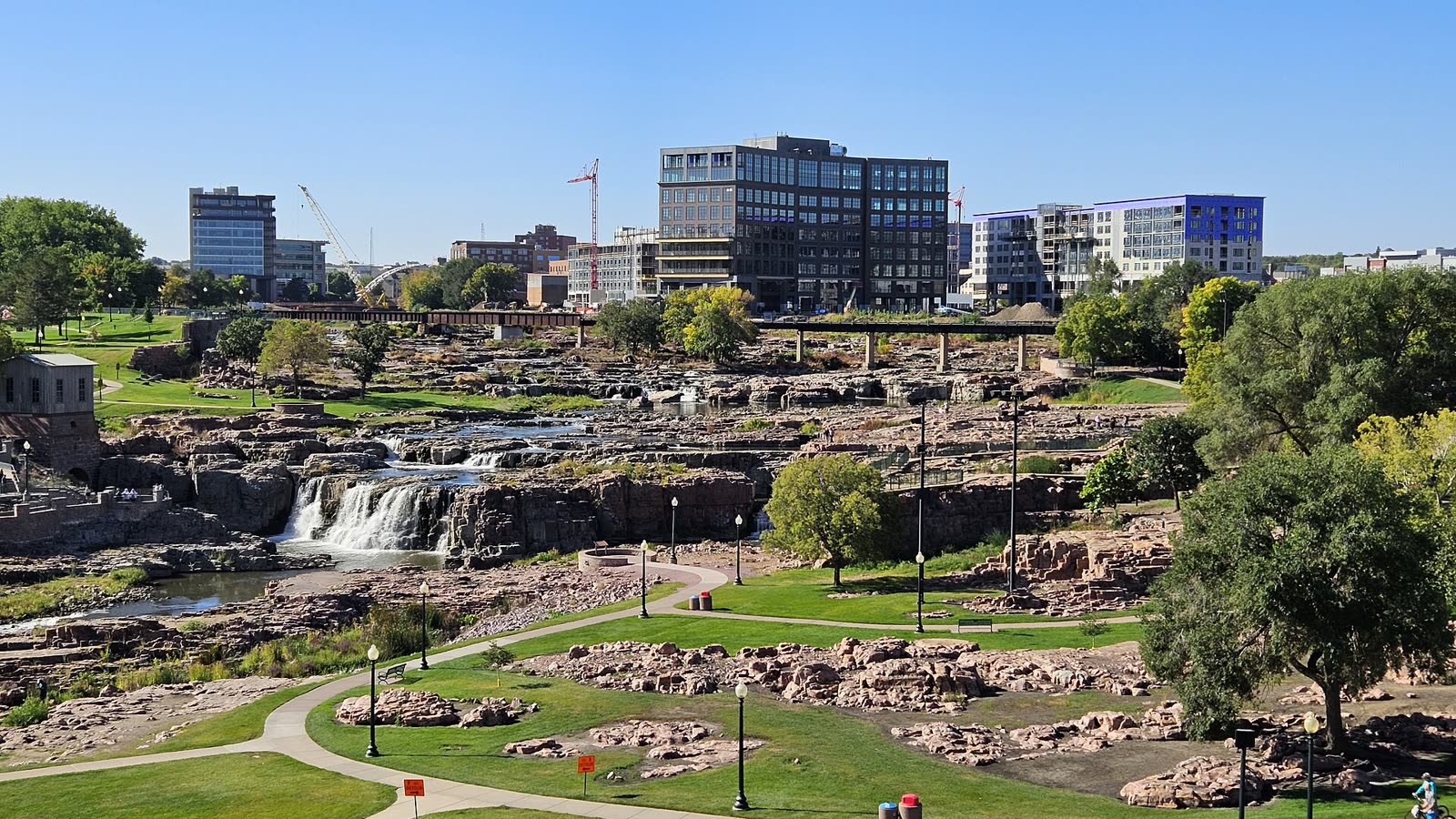
Sioux Falls commercial real estate in 2026: vacancy, rents, cap rates, and submarket data for industrial, office, retail, and land buyers and sellers.
After forty years of closing deals in this market, I can tell you that Sioux Falls commercial real estate rewards people who track the fundamentals rather than the headlines. 2026 is shaping up to be a year of steady, unglamorous demand: industrial users still need space near I-29 and I-90, retailers are still chasing rooftops in Tea, Harrisburg, and Brandon, and office landlords are still working through the slow return of downtown foot traffic. This report walks through vacancy, asking rents, cap rates, construction pipeline, and the interest rate backdrop, submarket by submarket, so you can make a decision instead of just reading a trend piece.
Sioux Falls has grown from a regional agricultural hub into a diversified economy anchored by healthcare (Sanford, Avera), financial services, and logistics, and that diversification is exactly why South Dakota commercial property has held up better than many Midwest metros through recent rate cycles. No state income tax, a business-friendly regulatory climate, and steady population growth in the 2 to 2.5 percent annual range for the metro have kept demand broad-based rather than dependent on a single industry. That said, 2026 is not 2021. Financing is more expensive, underwriting is tighter, and buyers are far more disciplined about price per square foot than they were three years ago.
The Big Picture: Sioux Falls CRE by the Numbers
Before we break out each product type, here is the snapshot our team is working from as of mid-2026, compiled from closed transactions, active listings, and conversations with lenders and appraisers active in the Sioux Falls metro.
Those numbers tell a simple story: industrial space Sioux Falls remains the tightest and most competitive product type, office is working through oversupply left by hybrid work, retail is bifurcated between strong suburban growth corridors and softer older centers, and cap rates across the board have widened by roughly 75 to 125 basis points compared to the 2021-2022 peak. None of that is unique to Sioux Falls, but the magnitude of the moves has been more muted here than in coastal and Sun Belt metros because Sioux Falls never overbuilt to the same degree.
Industrial: Still the Engine of Sioux Falls Commercial Real Estate
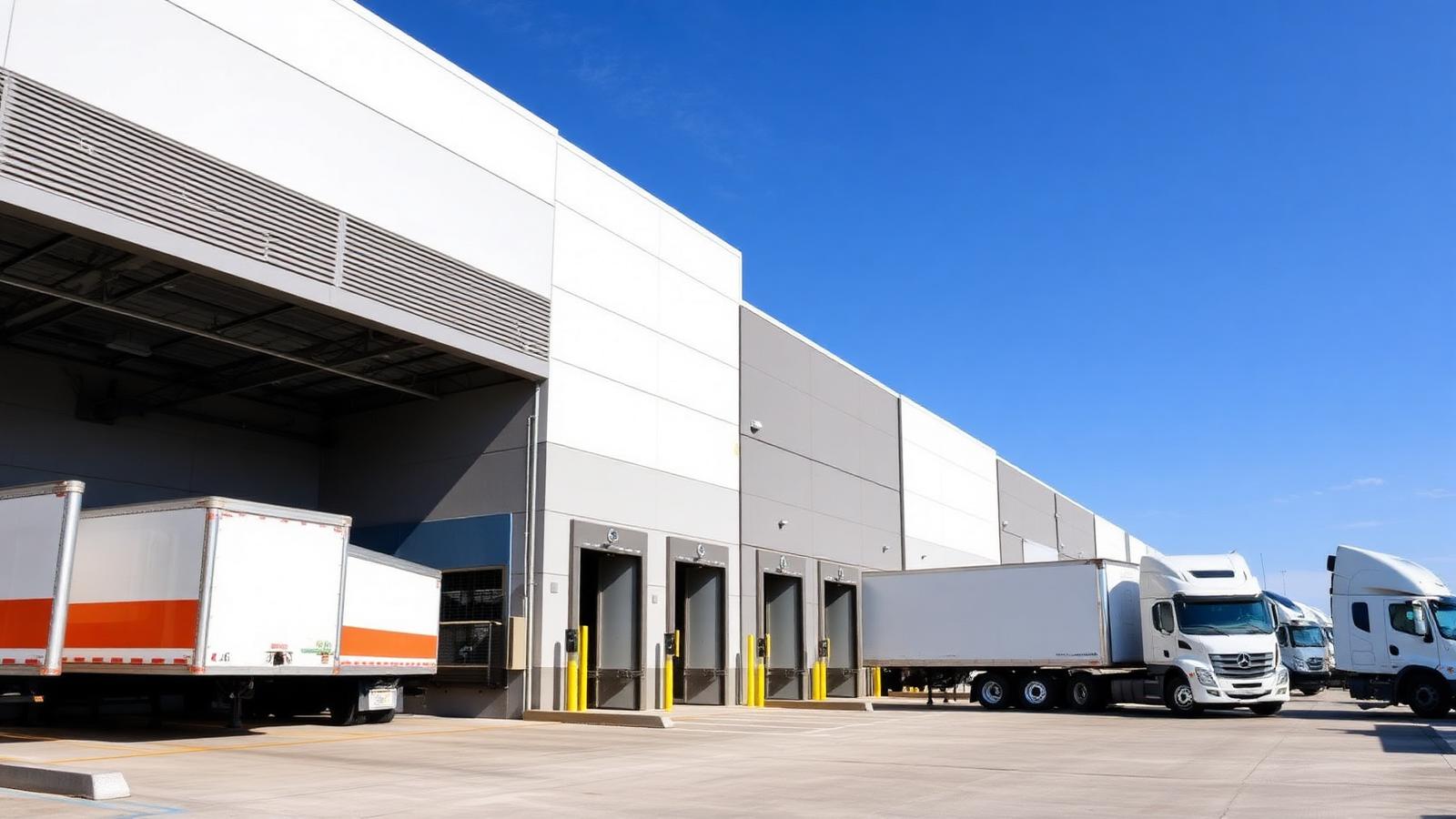
Industrial space Sioux Falls continues to be the hardest product type to find at scale. Vacancy sits around 5.8 percent metro-wide, but that number understates the real story for buildings between 20,000 and 80,000 square feet with dock doors and 24-foot-plus clear height, where functional vacancy is closer to 3 percent. Food processing, distribution, and light manufacturing tenants tied to the region's ag and bio-ag economy keep absorbing space as fast as it delivers.
North Industrial and the I-29/I-90 Interchange
The north side industrial submarket, anchored around the I-29 and I-90 interchange and stretching toward the airport, remains the address of choice for logistics and manufacturing users who need highway access in both directions. Land here has appreciated from roughly 3 to 5 dollars per square foot a decade ago to 6 to 9 dollars per square foot for shovel-ready, rail-adjacent or highway-fronting parcels today. Speculative development has slowed compared to 2022, which is actually healthy for landlords, because it means the next wave of new supply will be closer to pre-leased.
Southeast and East Industrial
Smaller flex-industrial and contractor-yard product on the southeast side, closer to the Foundation Park area and out toward Brandon, is seeing strong demand from trades businesses that were priced out of the north side. Asking rates for this product run 8 to 11 dollars per square foot NNN, and buildings under 15,000 square feet with a mix of office and warehouse are trading quickly when they hit the market, often in under 60 days.
Office: A Market Still Sorting Itself Out
Office is the most complicated conversation in Sioux Falls commercial real estate right now. Citywide Class A and B vacancy sits around 11.4 percent, up from roughly 8 percent pre-2020, driven almost entirely by hybrid work reducing per-employee square footage needs among professional services and financial tenants. But that headline number hides a two-tier market.
Downtown and Phillips Avenue
Downtown, particularly along Phillips Avenue and the surrounding blocks, has actually tightened for smaller, well-finished suites under 3,000 square feet, driven by professional services firms, creative agencies, and startups who want walkability, restaurants, and the energy of downtown redevelopment. Larger blocks of Class B space above 10,000 square feet are the soft spot, and landlords there are increasingly offering generous tenant improvement packages, 6 to 9 months free rent on longer terms, and creative subleasing arrangements to keep buildings occupied.
West Side and 41st Street Corridor
The 41st Street and west side office corridor, closer to the Empire Mall area and the medical campuses, has held up better because of proximity to Sanford and Avera facilities and the executive-suite demand that healthcare-adjacent tenants generate. Asking rents here run 15 to 19 dollars per square foot full service for Class A space, versus 12 to 16 dollars for comparable downtown product, reflecting parking availability and easier access for suburban commuters.
Owner-occupant conversions are the theme to watch. We have handled several transactions in the past 18 months where a business bought an underperforming office building at a meaningful discount to replacement cost, occupied part of it, and leased the rest, effectively lowering their occupancy cost below what they were paying in rent. If you run a business with 15 to 40 employees and steady cash flow, this is worth modeling before you renew your lease.
Retail: Bifurcated Between Growth Corridors and Legacy Centers
Retail in Sioux Falls commercial real estate is really two separate markets. The growth ring, Tea, Harrisburg, Brandon, and to a lesser extent Dell Rapids, is absorbing new retail as fast as rooftops get built, with population growth in Lincoln County among the fastest in the state. The other market is legacy retail corridors built out in the 1990s and 2000s that are now competing with newer, better-located centers.
Average NNN asking rents in the growth corridors run around 14.75 dollars per square foot for inline space and up to 24 to 28 dollars for small pad sites suited to quick-service restaurants and coffee concepts. Vacancy in these corridors is effectively negligible, under 4 percent, and new construction is largely pre-leased or built to suit before ground is broken.
Older centers along 12th Street, west 41st Street's aging stretches, and parts of the east side are dealing with a different reality: national tenant downsizing, discount and value-format retailers replacing traditional big boxes, and owners who need to reposition or redevelop rather than simply re-tenant. We are seeing more of these properties trade to buyers planning adaptive reuse, self-storage conversion, or medical and service-use redevelopment than to buyers planning to backfill with traditional retail.
Land and Development: Where the Growth Ring Is Headed
Land remains the foundation of every conversation about Sioux Falls commercial real estate's future, because so much of the metro's growth story depends on annexation and infrastructure extension. Harrisburg and Tea continue to see the most aggressive residential rooftop growth, which pulls commercial and retail land demand behind it on a lag of roughly 18 to 36 months. Brandon's commercial corridor along Highway 11 has quietly become one of the more interesting plays in the market, with reasonably priced land and a growing daytime population.
- North industrial corridor (I-29/I-90 interchange): tightest supply, highest per-acre pricing for shovel-ready sites
- Tea and Harrisburg: fastest rooftop growth, strong retail and service-use land demand
- Brandon (Highway 11 corridor): emerging value opportunity, lower per-acre basis than Tea/Harrisburg
- Dell Rapids: longer-horizon play, benefiting from overflow growth and lower land costs
- Vermillion: distinct smaller market, University of South Dakota anchors steady but modest commercial demand
Cap Rates and the Interest Rate Environment
Cap rates in Sioux Falls have widened from the historic lows of 2021-2022 but have not blown out the way they have in overbuilt Sun Belt markets. Stabilized single-tenant net lease deals with investment-grade tenants are trading between 6.75 and 7.5 percent, multi-tenant retail in strong corridors is trading between 7.25 and 8.5 percent, and value-add office and older retail requiring repositioning can be found at 9 percent or higher, reflecting real execution risk rather than distress pricing across the board.
Sioux Falls has never been a boom-and-bust market. It grows steadily, it does not overbuild by much, and that discipline is exactly what is protecting values here while other Midwest metros are seeing real cap rate expansion and distressed sales.
The Federal Reserve's rate path through 2026 has kept commercial financing more expensive than borrowers would like, with local and regional bank spreads on owner-occupied and investment commercial loans generally landing borrowers in the 6.75 to 7.75 percent range depending on loan-to-value, tenant quality, and relationship banking depth. SBA 504 financing continues to be the most attractive path for owner-occupants, particularly for industrial and flex buildings under 3 million dollars, because the below-market fixed rate on the second mortgage portion meaningfully lowers blended cost of capital.
Construction Pipeline: What Is Actually Getting Built
The construction pipeline in 2026 is smaller and more disciplined than it was two years ago, which is generally a good sign for existing owners. Industrial construction has shifted toward build-to-suit rather than speculative product, with most new starts already carrying a signed lease or purchase commitment before the foundation is poured. Multifamily-adjacent mixed-use projects, particularly downtown and along the Big Sioux River corridor, continue to add ground-floor retail and small office bays, which is quietly adding new small-format inventory without showing up in traditional retail vacancy statistics.
Retail construction is concentrated almost entirely in the growth ring, and most of what is under construction is either a pad site for a restaurant or bank, or a small strip center anchored by a regional or national tenant that has already signed a lease. Office construction has essentially paused outside of medical office buildings tied directly to Sanford or Avera expansion plans, which tells you everything you need to know about where lenders and developers see genuine demand right now.
What Buyers Should Do in This Market
Buyers who are disciplined about underwriting are finding real opportunities in 2026, particularly because fewer bidders are chasing each deal compared to 2021. The playbook that is working for our clients right now looks like this.
- 1.Underwrite at today's debt cost, not last year's rate assumptions, and stress test at a 100 basis point increase
- 2.Focus on functional real estate: clear height and dock doors for industrial, parking ratios for office, visibility and access for retail
- 3.Look one submarket ahead of demand: Brandon and Dell Rapids today look like Tea and Harrisburg did eight years ago
- 4.Use SBA 504 or USDA B&I financing where eligible to lower blended cost of capital on owner-occupied purchases
- 5.Negotiate seller financing or rate buydowns on deals that have sat on the market more than 90 days
What Sellers and Landlords Should Do
Sellers who price to 2021 comps are sitting on the market. Sellers who price to today's cap rate environment, and who invest a modest amount in deferred maintenance and curb appeal before listing, are still closing deals at reasonable timelines. Landlords with vacancy should focus energy on shorter, more flexible lease terms with built-in escalations rather than holding out for pre-pandemic rental rates on long terms; a tenant in the building at a fair rate beats a vacant suite waiting for a rate that may not return.
What Tenants Should Do
Tenants across every product type have more leverage in 2026 than they did in the last cycle, particularly in office and legacy retail. If your lease is coming up for renewal in the next 12 months, now is the time to test the market rather than accepting the landlord's first renewal offer. Industrial tenants should expect less negotiating room given tight vacancy, but should still push for renewal options and fair-market escalation language rather than fixed 4 to 5 percent annual bumps that were standard when rates were near zero.
Outlook for the Rest of 2026 and Into 2027
We expect industrial vacancy to stay in the mid single digits through the end of 2026, with rent growth moderating to 2 to 4 percent annually after several years of steeper increases. Office will likely see vacancy plateau rather than improve meaningfully until interest rates decline enough to make conversion and redevelopment economics work at scale. Retail in the growth ring should keep absorbing new supply at a healthy pace, while legacy retail corridors will continue to see redevelopment and change-of-use activity accelerate. Land values in Tea, Harrisburg, and Brandon should continue appreciating steadily, without the speculative spikes that characterized 2020-2022.
Sioux Falls commercial real estate in 2026 rewards patience, local knowledge, and disciplined underwriting over speed and speculation. Whether you are buying your first flex-industrial building, repositioning a legacy retail center, or trying to figure out whether your office lease renewal makes sense given current market rents, the data above should give you a real starting point rather than a national headline that does not reflect what is actually happening on the ground here.
Talk to a Local Broker Before You Move
Every submarket in this report has its own nuances that a spreadsheet cannot fully capture, from which side of an interchange has better truck access to which downtown block is about to see a new restaurant open that changes foot traffic patterns. Nelson Commercial Real Estate has been tracking these patterns in Sioux Falls for over 40 years, and our team, including Ron Nelson, Nicole Daggett, and Steve Herman, is large enough to close the deal and small enough to care about getting the details right. Call us at 605.977.0778 or email website@ncommercial.com to talk through your specific situation, whether you are buying, selling, or leasing in Sioux Falls or the surrounding growth ring.
Frequently asked questions
Talk it through with a broker.
Nelson Commercial has been closing Sioux Falls commercial real estate deals for decades. Call 605.977.0778 or book 30 minutes — no obligation.