Site Selection and Land Development in the Sioux Falls Growth Ring: From Raw Dirt to Ribbon Cutting
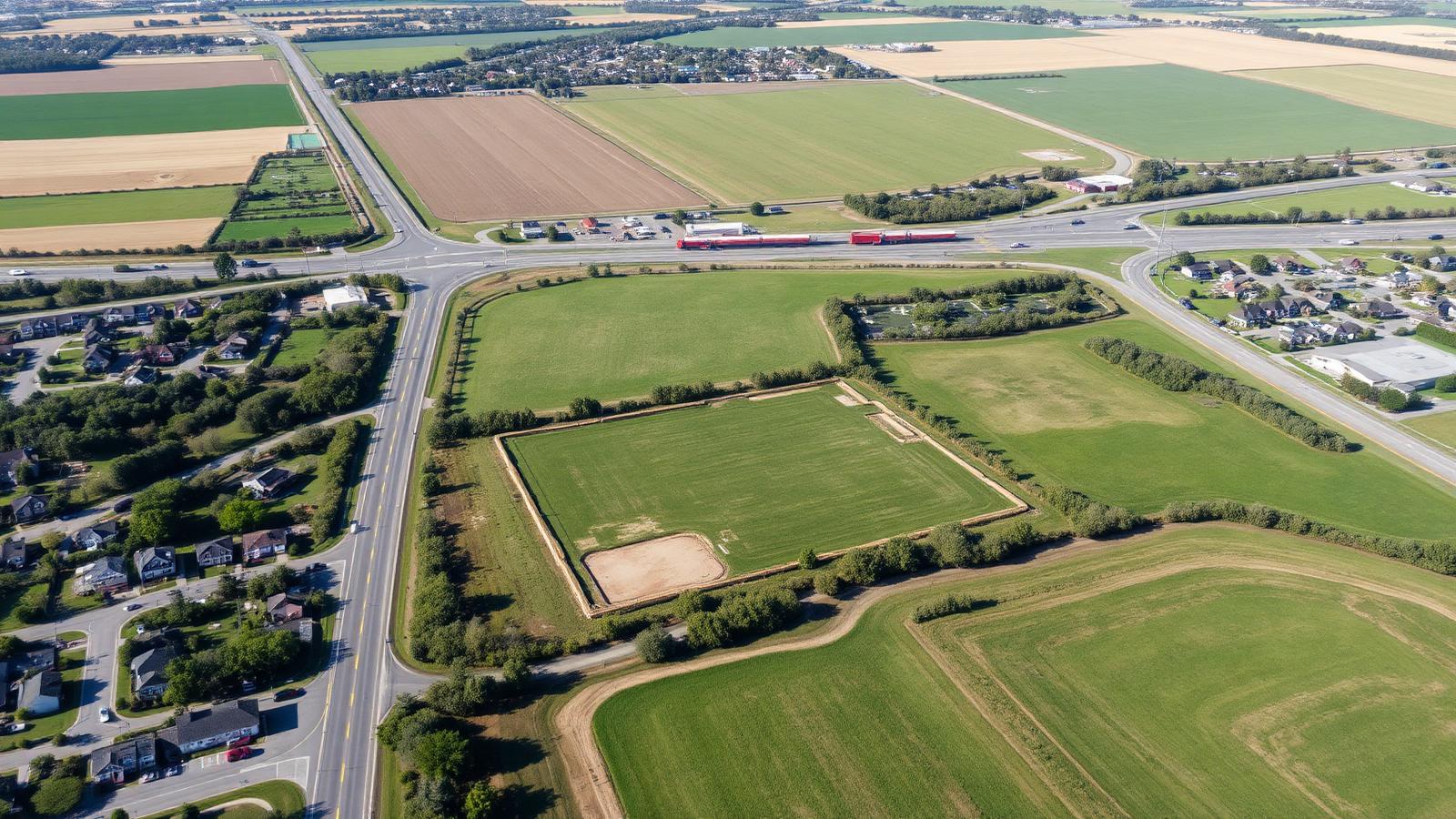
A developer's field guide to land development in Sioux Falls, from picking a growth corridor to zoning, utilities, and cost per buildable acre.
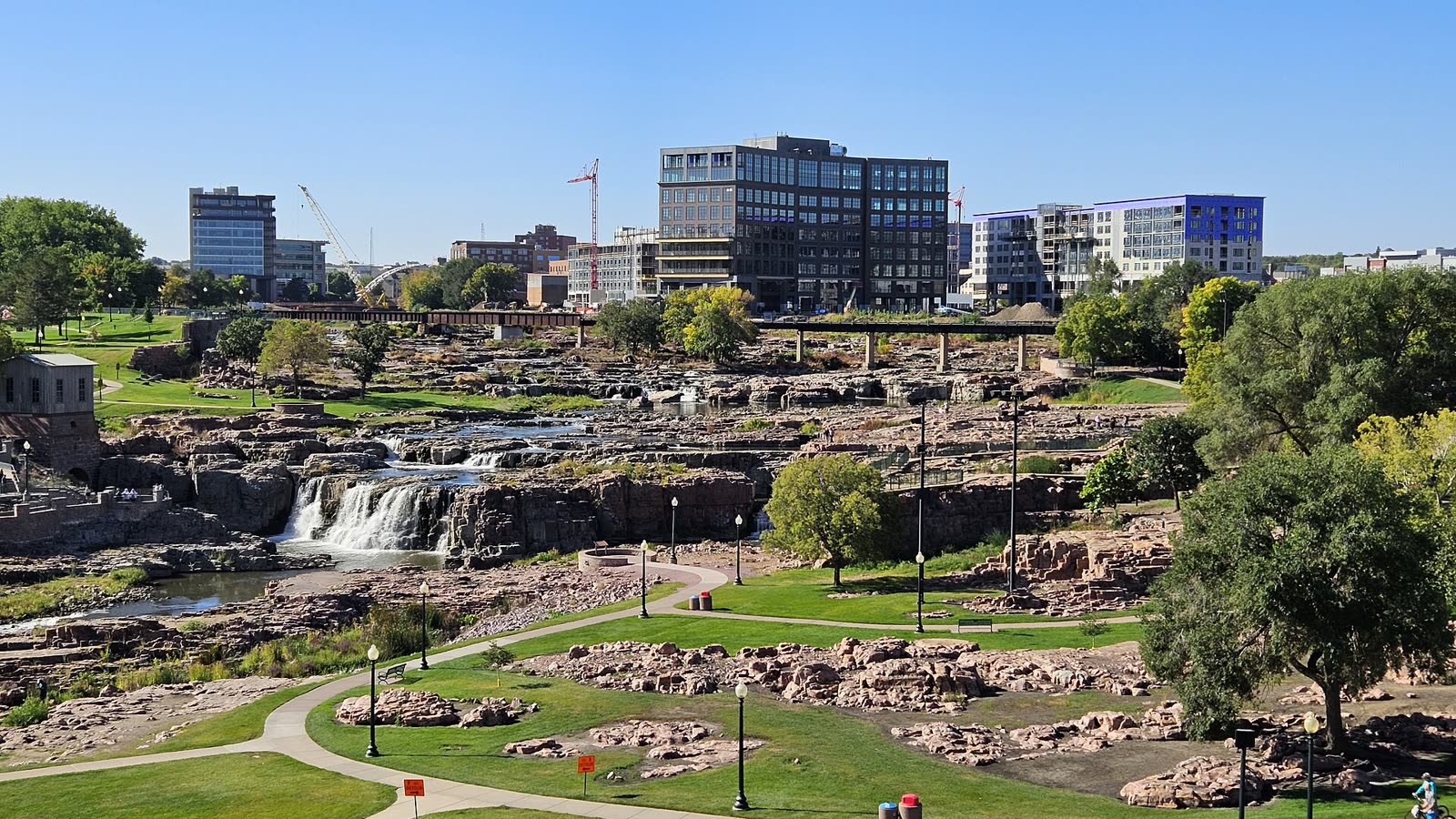
Every successful project in land development in Sioux Falls starts long before the first shovel breaks ground, back at the moment a developer decides which corner of the metro to bet on. I have walked raw pasture ground with clients that became thriving retail centers, and I have watched other sites sit stalled for years because nobody checked sanitary sewer capacity before signing a purchase agreement. This guide covers the full arc of a development project in and around Sioux Falls: where the growth is actually heading, how to evaluate a site's fundamentals, the entitlement and utility gauntlet, and what it really costs to turn raw dirt into a ribbon cutting.
Where Sioux Falls Growth Is Actually Heading
Sioux Falls commercial real estate has expanded outward in a fairly predictable ring for the last decade, and understanding that pattern is the first skill a site selector needs. Rooftops have pushed hardest to the southeast toward Brandon and to the south toward Harrisburg and Tea, both of which have seen residential permitting outpace almost every other community in the state. West of I-29 continues to fill in with industrial and flex product taking advantage of interstate access, while Dell Rapids to the north is emerging as the next affordable land play as Sioux Falls proper gets built out. The 85th Street corridor and the Veterans Parkway loop have become the default answer for where new retail and mixed-use projects land, because they connect growing residential rooftops to arterial traffic without funneling everything through older, more congested intersections.
Reading Rooftop Growth Before It Shows Up in the Data
By the time national retailers and their site selection teams show up with published trade area studies, the best corners are usually already spoken for. Local developers who track platted subdivisions, school enrollment growth in the Tea Area and Harrisburg districts, and building permit trends at the city and county level get a twelve to eighteen month head start on national players who are working off lagging demographic data.
Traffic Counts and Trade Area Analysis for Retail
For any retail-anchored development, traffic counts are the first filter and trade area depth is the second. The South Dakota Department of Transportation publishes annual average daily traffic counts for state highways, and the City of Sioux Falls maintains counts for arterial streets, both of which should be pulled for any corner under consideration along with a three- and five-year trend line, not just the most recent count. A single strong count year can be an anomaly from nearby construction detours, so look for consistent growth.
Trade area analysis goes beyond a simple ring study. For a Sioux Falls retail site, we look at drive-time isochrones layered with rooftop growth projections, household income distribution, and existing retail saturation in the same category, because a corner with 20,000 cars a day still fails if three competing centers already serve the same trade area. Corners at signalized intersections with dedicated turn lanes consistently outperform unsignalized access points, even when raw traffic counts are similar, because ease of entry and exit drives conversion for convenience-oriented retail and restaurant users.
Zoning and the Sioux Falls Entitlement Process
Every parcel inside city limits carries a zoning designation that dictates use, density, setbacks, and parking ratios, and understanding whether your intended use is permitted, conditional, or prohibited under the current zoning is the very next step after site fundamentals check out. The City of Sioux Falls Planning and Development Services department handles rezoning applications, conditional use permits, and planned development overlays, and the process typically moves through a planning commission recommendation before final approval by the City Council. Straightforward rezonings that align with the city's comprehensive plan can move in as little as sixty to ninety days, while planned developments with negotiated site plans, or rezonings that face neighborhood opposition, can stretch to six months or longer.
Conditional Uses and Planned Developments
Many commercial uses that are not outright permitted in a given zoning district can still be approved as a conditional use, subject to specific site plan conditions around screening, hours of operation, or traffic mitigation. Planned developments offer more flexibility for larger, mixed-use, or unconventional projects, allowing negotiated setbacks and use mixes in exchange for a more detailed site plan submission up front. Developers working outside city limits in Lincoln or Minnehaha County face a parallel but separate process through the county planning department, with different density and access standards until annexation occurs.
Platting and Annexation
Raw ground purchased on the edge of the metro often needs to be platted before it can be developed, a process that establishes legal lots, dedicates rights-of-way, and assigns easements for utilities. Preliminary plat approval typically requires a public hearing and planning commission review, followed by final plat recording once all conditions, including required infrastructure improvements, are satisfied. Land just outside city limits in a growth corridor like Harrisburg or Tea may need to be annexed into the municipality before city utilities and services are extended, and annexation timing should be negotiated as a contingency in the purchase agreement rather than assumed.
Utilities and Sanitary Sewer Availability
Nothing kills a development timeline faster than discovering, after closing, that sanitary sewer capacity does not reach the site or that a lift station upgrade is required before a single building permit can be pulled. Sioux Falls Public Works maintains sewer and water capacity maps, and any serious site evaluation should include a will-serve letter or capacity confirmation from the city before earnest money goes hard. In fast-growing corridors like southern Harrisburg or western reaches near I-29, trunk line extensions are sometimes required, and the cost of extending sewer and water to a site can run from a few hundred thousand dollars for a short extension to well over a million for a site far from existing infrastructure, occasionally offset through cost-sharing agreements with the municipality or adjacent developers.
Stormwater, Floodplain, and Soils
Stormwater management requirements in Sioux Falls generally require on-site detention sized to pre-development runoff rates, which eats into buildable area and needs to be accounted for early in site planning, not as an afterthought once a site plan is nearly final. FEMA floodplain maps should be checked for any parcel near the Big Sioux River, Skunk Creek, or their tributaries, since floodplain or floodway designations can trigger elevation requirements, compensatory storage obligations, or outright development restrictions that materially change a pro forma.
Geotechnical and Soils Considerations
A geotechnical report is not optional for any project involving structures, pavement, or significant grading. Much of the Sioux Falls area sits on glacial till with variable clay content, and expansive clay soils can require deeper foundations, additional structural fill, or soil stabilization that adds real cost if not anticipated in early budgeting. We have seen projects absorb six-figure change orders because a geotech report was ordered after the construction budget was already set rather than before.
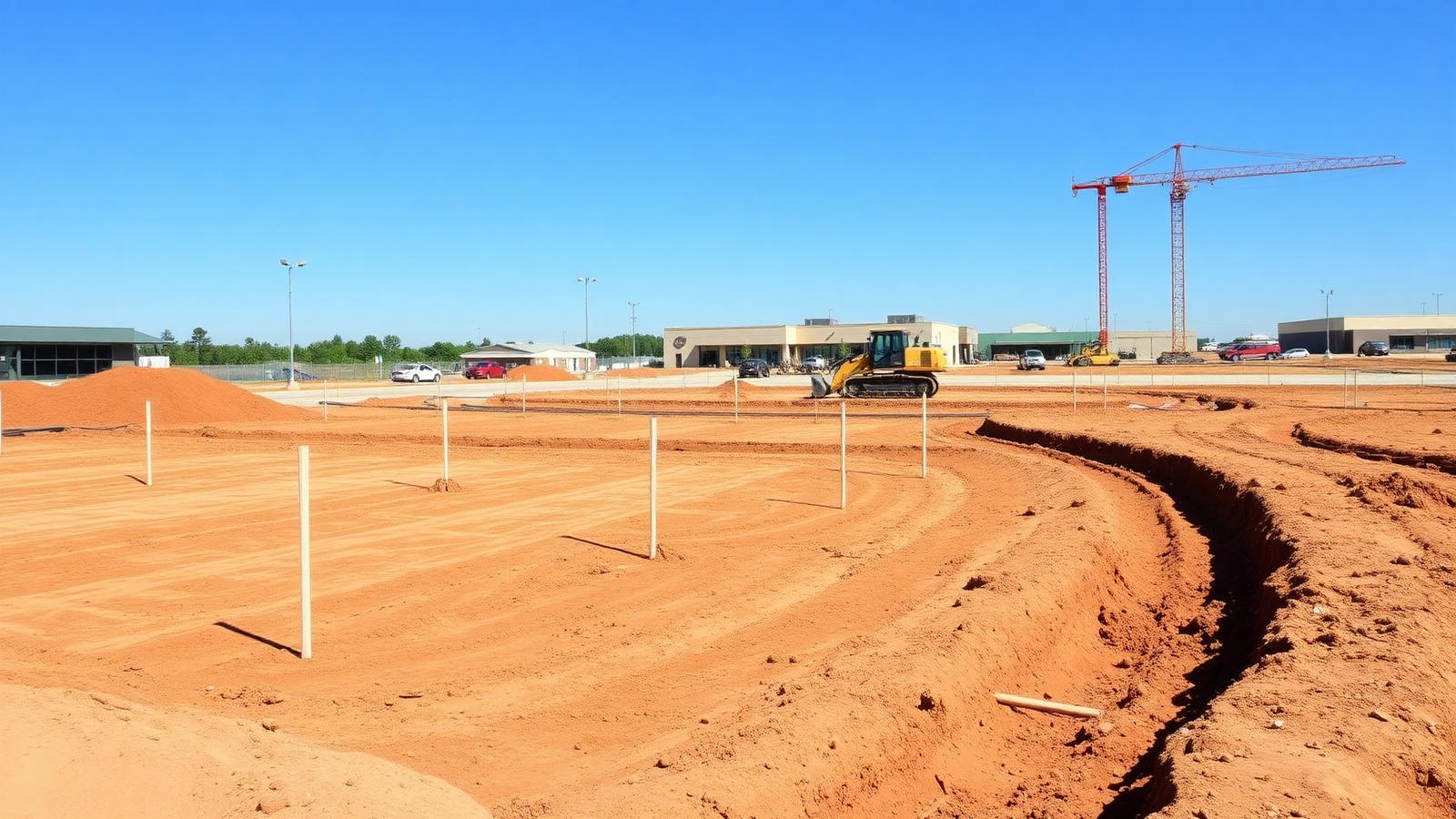
Access, Curb Cuts, and Traffic Engineering
Access approval from the City of Sioux Falls or the state DOT, depending on which roadway a site fronts, dictates where curb cuts, turn lanes, and median breaks are permitted, and these decisions can make or break a retail pad's viability. Corner sites along high-count arterials often require a traffic impact study once projected trip generation exceeds a threshold set by the reviewing agency, and the findings can require the developer to fund signal upgrades, additional turn lanes, or deceleration lanes as a condition of approval. Building these costs into the pro forma from the outset avoids an unpleasant surprise during final site plan review.
TIF Districts and Development Incentives
Tax increment financing remains one of the more useful tools available to developers taking on infrastructure-heavy projects in growth corridors around Sioux Falls. A TIF district allows the incremental property tax generated by new development to be redirected toward reimbursing eligible infrastructure costs, such as street extensions, utility oversizing, or stormwater improvements, over a set number of years. Municipalities including Sioux Falls, Tea, and Harrisburg have each approved TIF districts for qualifying projects, and eligibility generally depends on demonstrating that the project would not otherwise be feasible without the assistance, sometimes called the but-for test. Other incentive tools worth exploring include tax abatements for owner-occupied industrial development and municipal cost-sharing agreements for trunk utility extensions that will serve multiple future developments.
Cost Per Buildable Acre
Raw land price per acre tells you almost nothing until you calculate cost per buildable acre, which accounts for detention ponds, rights-of-way dedication, easements, and unusable floodplain or wetland area. A ten-acre parcel priced attractively at the gross level can shrink to seven buildable acres once a two-acre regional detention pond and a one-acre right-of-way dedication are subtracted, meaningfully changing the effective land basis per usable acre. Sophisticated buyers run this calculation before making an offer, factoring in site work costs per acre for grading, utility extension, and stormwater infrastructure, which in the Sioux Falls market commonly range from 150,000 to 400,000 dollars per acre depending on topography, utility distance, and soil conditions.
Phasing and Pad Disposition Strategy
Larger tracts are rarely developed all at once. A common strategy for a twenty- to forty-acre commercial parcel is to master plan the full site, install backbone infrastructure sized for the entire development, and then phase pad sales or ground leases to national and regional users to fund subsequent phases. Selling an outparcel to a bank branch or a quick-service restaurant early in a project can generate the capital needed to complete infrastructure for the remaining phases, while retaining the best in-line retail or flex space for longer-term ownership and cash flow.
Sequencing Matters
Developers who sequence pad sales without regard to the overall site plan often end up with an awkward remaining parcel that is harder to lease or sell. We recommend finalizing a master site plan, including cross-access easements and shared parking agreements, before marketing any individual pad, so early sales do not compromise the value or functionality of the phases that follow.
Construction Cost Benchmarks
Vertical construction costs in the Sioux Falls market have climbed steadily over the past several years, and developers underwriting new projects should budget current numbers rather than costs from even two or three years ago. Shell retail construction commonly runs from 150 to 220 dollars per square foot depending on finish level and tenant improvement allowance, while light industrial and flex space typically comes in lower, often between 100 and 160 dollars per square foot for tilt-up or pre-engineered metal construction. Multifamily construction costs vary widely by product type and unit mix, but garden-style wood frame product in the metro has generally run in the 140,000 to 190,000 dollar per unit range including site work. These figures move with material and labor markets, so always confirm current pricing with a local general contractor before finalizing a pro forma.
The developers who win in this market are not the ones who find the cheapest dirt. They are the ones who know exactly what that dirt costs once sewer, stormwater, and a traffic study are accounted for.
A Due Diligence Checklist and Realistic Timeline
A well-run due diligence period for a commercial development site in the Sioux Falls area typically runs sixty to one hundred twenty days depending on complexity, and should proceed roughly in this order.
- 1.Confirm current zoning and permitted uses, and identify whether rezoning or a conditional use permit is required (weeks 1-2).
- 2.Order a title commitment and survey to identify easements, encroachments, and access rights (weeks 1-3).
- 3.Request a sewer and water capacity or will-serve confirmation from the municipal public works department (weeks 2-4).
- 4.Commission a Phase I environmental site assessment and a geotechnical soils report (weeks 2-6).
- 5.Pull FEMA floodplain data and confirm stormwater detention requirements with the city engineer (weeks 3-5).
- 6.Engage a civil engineer to prepare a preliminary site plan and estimate site work costs (weeks 4-8).
- 7.Submit rezoning, plat, or planned development applications as needed and track planning commission and council hearing dates (weeks 6-16).
- 8.Finalize a traffic impact study and access approval with the city or state DOT if trip generation thresholds are triggered (weeks 6-14).
- 9.Lock construction cost estimates with a general contractor and confirm financing terms before closing on the land (weeks 10-16).
Why Local Site Selection Guidance Matters
National site selection teams and out-of-state developers frequently underestimate how much local knowledge shapes a successful outcome in land development in Sioux Falls. Knowing which corridor has sewer capacity today versus which one needs a two-year trunk line extension, which planning commissioners have historically supported density near single-family neighborhoods, and which landowners are realistically motivated to sell rather than simply testing the market, all come from years of transactions and relationships in this specific metro. That local context routinely saves clients months of timeline and meaningful money in avoided false starts.
Let's Walk Your Site Together
Whether you are evaluating a corner in Harrisburg, assembling parcels near the 85th Street corridor, or considering raw ground west of I-29 for an industrial park, Nelson Commercial Real Estate can help you evaluate site fundamentals, navigate entitlements, and structure a phased development plan that pencils. Call us at 605.977.0778 or email website@ncommercial.com before you go under contract, and let's make sure the dirt you are buying is actually buildable. Large enough to close the deal, small enough to care.
Frequently asked questions
Talk it through with a broker.
Nelson Commercial has been closing Sioux Falls commercial real estate deals for decades. Call 605.977.0778 or book 30 minutes — no obligation.